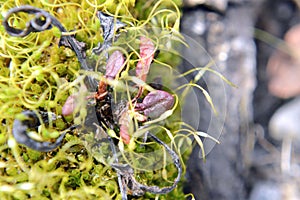
Getting a tack-sharp photo is one of the greatest challenges in photography.
I'll mention up front that I use Single Point Focus, I zero-in on only one point on my focus grid [that little set of boxes or dots in your camera that light up when you push the shutter half-down to focus].
Depending on your camera, you may have to shoot in other than the automatic pre-sets like "Landscape," "People/Portrait," and "Sports." They are fine, but limiting, and take away a lot of your creative control. For me, Single Point focus works exceedingly well!
Not only that, I attended a seminar on lenses last weekend, and when I mentioned that I shoot in Single Point Auto Focus, the instructor gave me a thumbs up and suggested that everyone else at least try it!
One tip from me before we let the experts weigh in: If you are too close to your subject, you may not get that tack-sharp focus! If you want a closeup, or to have your subject fill the frame, it may better to zoom in than to move in too close!
On to some more good stuff! Here are two resources offering stellar focusing advice.
Please Note this very important distinction: Manual Mode does NOT mean Manual Focus. Manual Mode means you are not using one of the pre-set automatic modes like "Landscape," and etc. but you are using Auto-focus!
1 - link to an article on Digital Photography School.com
2 - six-minute video with Paul from Photo Genius in Australia who does an excellent job showing how and why to use Single Point Auto-focus, and change the focus points on two camera models. Refer to your Owners Manual to find out how to change your camera.
I'll mention up front that I use Single Point Focus, I zero-in on only one point on my focus grid [that little set of boxes or dots in your camera that light up when you push the shutter half-down to focus].
Depending on your camera, you may have to shoot in other than the automatic pre-sets like "Landscape," "People/Portrait," and "Sports." They are fine, but limiting, and take away a lot of your creative control. For me, Single Point focus works exceedingly well!
Not only that, I attended a seminar on lenses last weekend, and when I mentioned that I shoot in Single Point Auto Focus, the instructor gave me a thumbs up and suggested that everyone else at least try it!
One tip from me before we let the experts weigh in: If you are too close to your subject, you may not get that tack-sharp focus! If you want a closeup, or to have your subject fill the frame, it may better to zoom in than to move in too close!
On to some more good stuff! Here are two resources offering stellar focusing advice.
Please Note this very important distinction: Manual Mode does NOT mean Manual Focus. Manual Mode means you are not using one of the pre-set automatic modes like "Landscape," and etc. but you are using Auto-focus!
1 - link to an article on Digital Photography School.com
The author does an excellent job explaining simply but in depth how focus point sensors and auto-focus works, and at the end includes a list of cameras by make and model telling what type of focusing points each camera uses.
2 - six-minute video with Paul from Photo Genius in Australia who does an excellent job showing how and why to use Single Point Auto-focus, and change the focus points on two camera models. Refer to your Owners Manual to find out how to change your camera.